Photogrammetry Session: Exploring the Secrets of the Vasa Warship - Helge


Subject "H" Rendering on Reality Capture
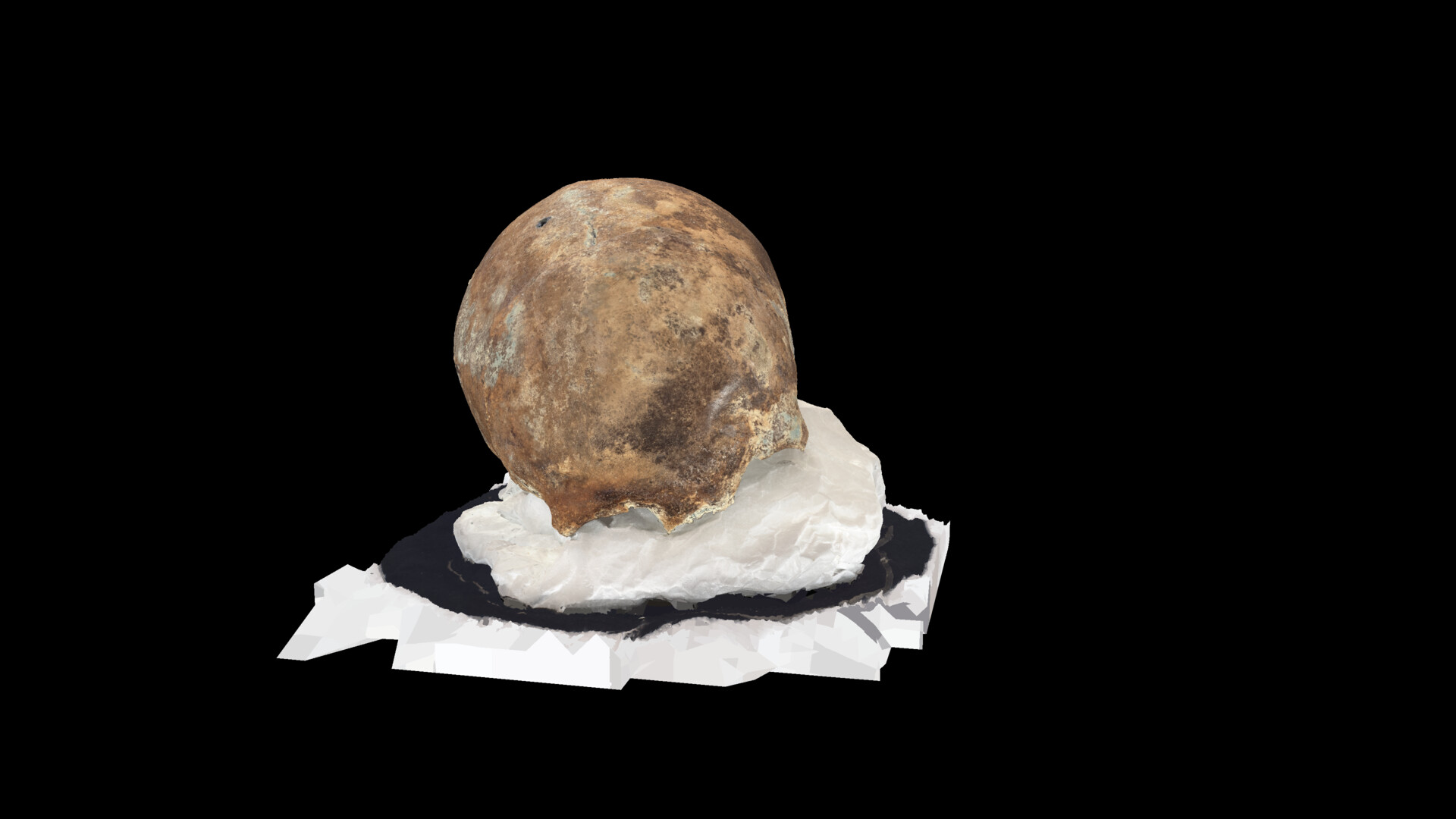
Subject "H" Rendering on Reality Capture

Subject "H" Rendering on Reality Capture

Subject "H" Rendering on Reality Capture

Subject "H" Rendering on Reality Capture

Subject "H" Rendering on Reality Capture

Subject "H" Rendering on Reality Capture

Photos taken at Vasa Museet. Credit to Oscar Nilsson and Vasa Museet

Photos taken at Vasa Museet. Credit to Oscar Nilsson and Vasa Museet

Photos taken at Vasa Museet. Credit to Oscar Nilsson and Vasa Museet

Photos taken at Vasa Museet. Credit to Oscar Nilsson and Vasa Museet

My working tool

My working tool

My working tool

My working tool
A timeless saga of ambition, tragedy, and the enduring quest to unravel the mysteries of the deep.
Final bust by Oscar Nilsson
Subject Helge from the Vasamuseet collection represents a remarkable piece of history—the Vasa Warship, which met a tragic fate in 1628. Let's delve into the fascinating story behind this iconic vessel and the cutting-edge techniques used to capture its legacy.
The Vasa Warship: A Brief History
Vasa (also known as Wasa*) was a Swedish warship commissioned by King Gustavus Adolphus in the early 17th century. Built between 1626 and 1628, it symbolized Sweden's naval might and was a testament to the king's ambitions.
- The ship was lavishly adorned with ornate carvings, gilded decorations, and an impressive array of bronze cannons. Upon completion, it stood as one of the most powerful warships in the world.
- However, Vasa's grandeur concealed a critical flaw: it was dangerously unstable due to an excessive weight distribution in its upper structure. Despite this, the ship was ordered to set sail.
The Ill-Fated Maiden Voyage
On August 10, 1628, Vasa embarked on its maiden voyage from Stockholm harbour. Just 1,300 meters into the journey, disaster struck. Caught in a strong wind, the ship heeled over and quickly sank, taking with it the hopes of the Swedish navy.
- The reasons behind this tragic event were multifaceted. The king, leading the army in Poland then, was eager to see Vasa take its place as the flagship. Subordinates hesitated to voice concerns, and the ship's instability remained unaddressed.
Rediscovery and Salvage
For centuries, Vasa lay forgotten beneath the waters of the Baltic Sea. Yet, in the late 1950s, marine archaeologists located its resting place in a busy shipping area near Stockholm.
In 1961, an ambitious salvage operation raised Vasa from the depths. Remarkably, much of its hull remained intact, providing a unique glimpse into the past.
Thousands of artefacts—including clothing, weapons, coins, and even human remains were recovered during the excavation. Subject "H" emerged as a poignant reminder of the ship's ill-fated voyage.
Photogrammetry and the Human Remains
My Photogrammetry photoscan session of the human remains from the Vasa Ship is a testament to modern technology intersecting with ancient history.
Using 380+ meticulously captured photographs, I employ Photogrammetry, 3D scanning, and 3D printing techniques to recreate the delicate bones and fragments that once belonged to subject "H" aboard Vasa.
- These human remains, preserved for over 300 years, now serve as a bridge between past and present—a tangible connection to the ill-fated crew aboard the magnificent warship.
Conclusion
In sharing my work, I honour the memory of those who perished aboard Vasa. Subject "H" becomes more than a mere artefact; it embodies resilience, curiosity, and the relentless pursuit of knowledge. Visitors exploring the Vasa Museum encounter a ship and a vivid chapter in Sweden's maritime history.
Oscar Nilsson is the job commissioner for the Photogrammetry, 3D scanning, and 3D printing projects at Vasamuseet.
Oscar Nilsson, a renowned reconstruction artist, can breathe life into Photogrammetry individuals whose remains have been excavated by fellow archaeologists. His expertise is re-creating lifelike human faces using high-tech tools and artistic skills.
Here's how he works his magic:
Archaeologists Provide Skulls: They entrust Nilsson with ancient skulls, which are the starting point for his reconstructions.
3D Printing and DNA Analysis: Nilsson employs cutting-edge techniques, including 3D printing and DNA analysis, to refine his reconstructions. These tools allow him to delve into the intricate details of facial anatomy.
Crafting Facial Features: Guided by bone structure and scientific data sets, Nilsson crafts facial features by hand. He estimates the thickness of muscle and flesh in different areas of the face.
Artistic Touch: Once the reconstruction reaches the "mannequin stage," Nilsson infuses it with life. His artistic prowess breathes authenticity into the faces, ensuring scientific accuracy.
The field of ancient DNA has been a game changer for facial reconstruction. Unlike two decades ago, when determining skin, hair, and eye colour was a guessing game, DNA extraction and analysis advancements now provide detailed insights. For instance, thanks to this wealth of data, Nilsson can accurately depict an early inhabitant of Mesolithic Britain with the appropriate dark skin and eyes.
Oscar Nilsson's work bridges the gap between the distant past and our present understanding, allowing us to glimpse the faces of those who lived long ago. His reconstructions serve as powerful reminders of our shared human history.
Scanned with Photogrammetry with circa 380 photos with a cross-polarized method on a 50mm objective, mounted on a Nikon D5300 and a Godox Wistro AR400.
Sources:
www.nationalgeographic.com
www.news.artnet.com
www.vasamuseet.se